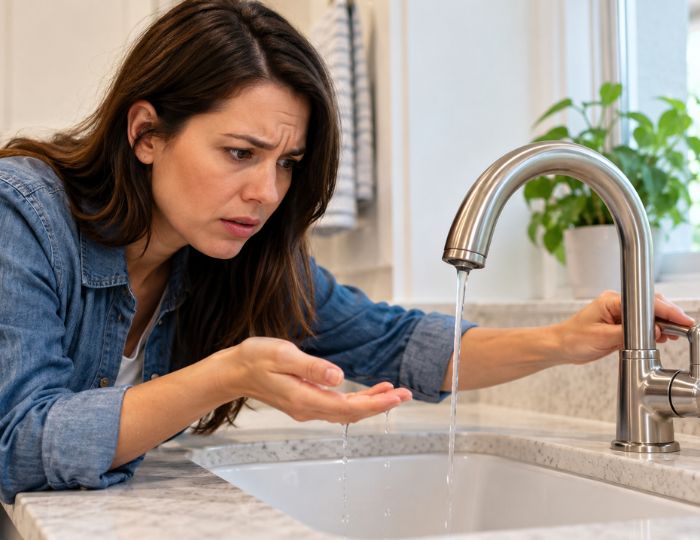
You turn on the shower and barely get enough pressure to rinse off. Someone starts the washing machine, and suddenly the kitchen faucet slows to a trickle. Maybe the problem happens throughout the house—or perhaps it’s limited to one sink or shower.
Low water pressure can be frustrating, but it can also provide an important clue about what’s happening inside your plumbing system.
Sometimes the cause is relatively simple, such as a clogged fixture. Other times, declining pressure can point to leaks, deteriorating pipes, or another plumbing problem that deserves professional attention.
At Ludlow Plumbing, we recommend looking at where, when, and how often the pressure problem occurs before assuming you know the cause.
Is the Low Water Pressure Affecting One Fixture or the Whole House?
One of the first questions to ask is whether the pressure problem is isolated.
Turn on several fixtures around your home.
If one faucet has weak flow while everything else works normally, the problem may be associated with that particular fixture.
If faucets and showers throughout the house suddenly have poor pressure, however, the issue may involve a larger portion of the plumbing system.
Homeowners experiencing broader plumbing problems can learn more about Ludlow Plumbing’s residential plumbing repair services.
Could the Faucet or Showerhead Be the Problem?
Mineral buildup and debris can restrict water flow through faucets and showerheads.
If the problem occurs at only one fixture, inspect the aerator or showerhead for visible buildup.
The fixture itself could also be worn, damaged, or malfunctioning.
Ludlow Plumbing provides professional faucet services for homeowners dealing with fixtures that need additional attention.
But when multiple fixtures lose pressure simultaneously, it’s time to look beyond an individual faucet.
Can a Hidden Plumbing Leak Cause Low Water Pressure?
Yes. A plumbing leak can potentially contribute to changes in water pressure.
Water escaping somewhere along the plumbing system may mean less water reaches the fixture you’re using.
The challenge is that not every leak is obvious.
You might notice dripping water or a puddle, but hidden leaks can instead reveal themselves through symptoms such as:
- Water stains on walls or ceilings
- Damp areas
- Unexplained moisture
- Musty odors
- Unusual increases in water usage
- Sounds of running water
- Changes in water pressure
If you suspect a hidden problem, professional leak detection and repair can help determine where water is escaping.
Don’t Ignore Repeated Pressure Changes
A brief pressure change when several fixtures are running isn’t necessarily the same as a persistent problem.
Pay attention to patterns.
If pressure has gradually worsened or repeatedly drops without an obvious explanation, professional inspection may be worthwhile.
Our guide to the signs you may need professional plumbing repair covers additional symptoms homeowners shouldn’t ignore.
Could Aging or Damaged Pipes Restrict Water Flow?
Your pipes themselves can also influence water pressure.
Older plumbing systems may develop corrosion, buildup, damage, or other conditions that restrict flow or contribute to recurring leaks.
The extent of a piping problem matters.
A localized issue may call for targeted repairs, while more widespread deterioration can lead homeowners to discuss larger solutions.
Ludlow Plumbing offers piping and repiping services for residential plumbing systems that need professional evaluation.
Replacing pipes is a significant decision, however. Low pressure alone doesn’t automatically mean your entire home needs repiping.
The underlying cause should be identified first.
What If Low Pressure Happens With Drain Problems?
Water-supply pressure and drainage are different sides of your plumbing system.
If a sink fills because water isn’t draining properly, for example, that doesn’t necessarily mean the water supply has low pressure.
Slow drainage may indicate a clog or another drainage issue.
Homeowners experiencing recurring drainage problems can explore professional drain cleaning services.
If several drains throughout the home are slow, read our guide explaining what causes slow drains throughout a home.
Why Professional Diagnosis Matters
Low water pressure is a symptom—not a complete diagnosis.
That’s important because several plumbing problems can create similar homeowner complaints.
Replacing a faucet won’t solve a hidden pipe leak. Cleaning a showerhead won’t fix deteriorated piping. Repiping a home would be excessive if the actual issue were isolated to a single fixture.
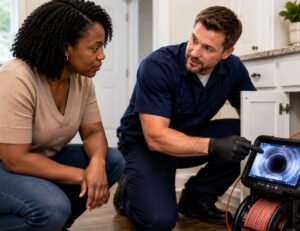
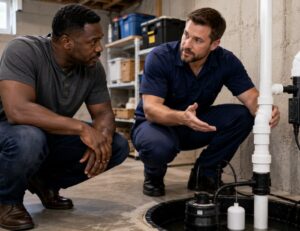
A plumber can evaluate the system and determine what is actually causing the problem before recommending repairs.
For homeowners in Ludlow Plumbing’s service area, you can review the company’s residential plumbing services to learn more about available solutions.
Can Plumbing Maintenance Help Prevent Pressure Problems?
Routine attention to your plumbing system can help you identify changes before they turn into larger surprises.
Watch for leaks, unusual sounds, slow drains, fixture problems, and changes in pressure.
Knowing what is normal for your home makes unusual behavior easier to spot.
For additional preventive guidance, read our plumbing maintenance tips for homeowners.
Call Ludlow Plumbing When Low Water Pressure Won’t Go Away
If you’ve cleaned a fixture and the problem persists—or low pressure affects several areas of your home—it may be time for professional diagnosis.
Ludlow Plumbing serves homeowners with plumbing repair, leak detection, piping, drain, water heater, and other residential plumbing needs.
You can learn more about Ludlow Plumbing or contact the team when you need help tracking down a persistent plumbing problem.
Key Takeaways
- Determine whether low pressure affects one fixture or multiple areas of the home.
- Mineral buildup or a faulty fixture may restrict flow at a single faucet or shower.
- Hidden plumbing leaks can sometimes contribute to pressure changes.
- Aging or damaged piping may restrict water flow.
- Low water pressure and slow drainage are different plumbing issues.
- Persistent or worsening pressure problems deserve professional evaluation.
- Diagnosing the cause before replacing plumbing components can help avoid unnecessary repairs.
- Paying attention to changes in your plumbing system can help identify problems earlier.